Japan isn’t an especially cold country.
For example, Tokyo sits at about 35.4°N—slightly north of Los Angeles, but far south of Washington, D.C.
That said, Japan stretches a long way from north to south, and winters in Hokkaido and the Tōhoku region are fully snow-covered. Even Tokyo drops below an average of 10°C (50°F) in winter. If you’re visiting between December and February, and you plan to spend a lot of time walking outdoors, you’ll definitely need a bit of cold-weather strategy.
This is where Japan’s stick-on heat pads—called kairo—come in. They’re easy to use, surprisingly powerful, and everywhere: drugstores, convenience stores, supermarkets. For locals they’re just an everyday winter item, but for travelers they’re one of those “you’re missing out if you don’t know about them” essentials.
In this guide, you’ll learn what kairo are, how they work, the different types available, and where to buy them during your trip.
1. What Are Stick-On Heat Pads?
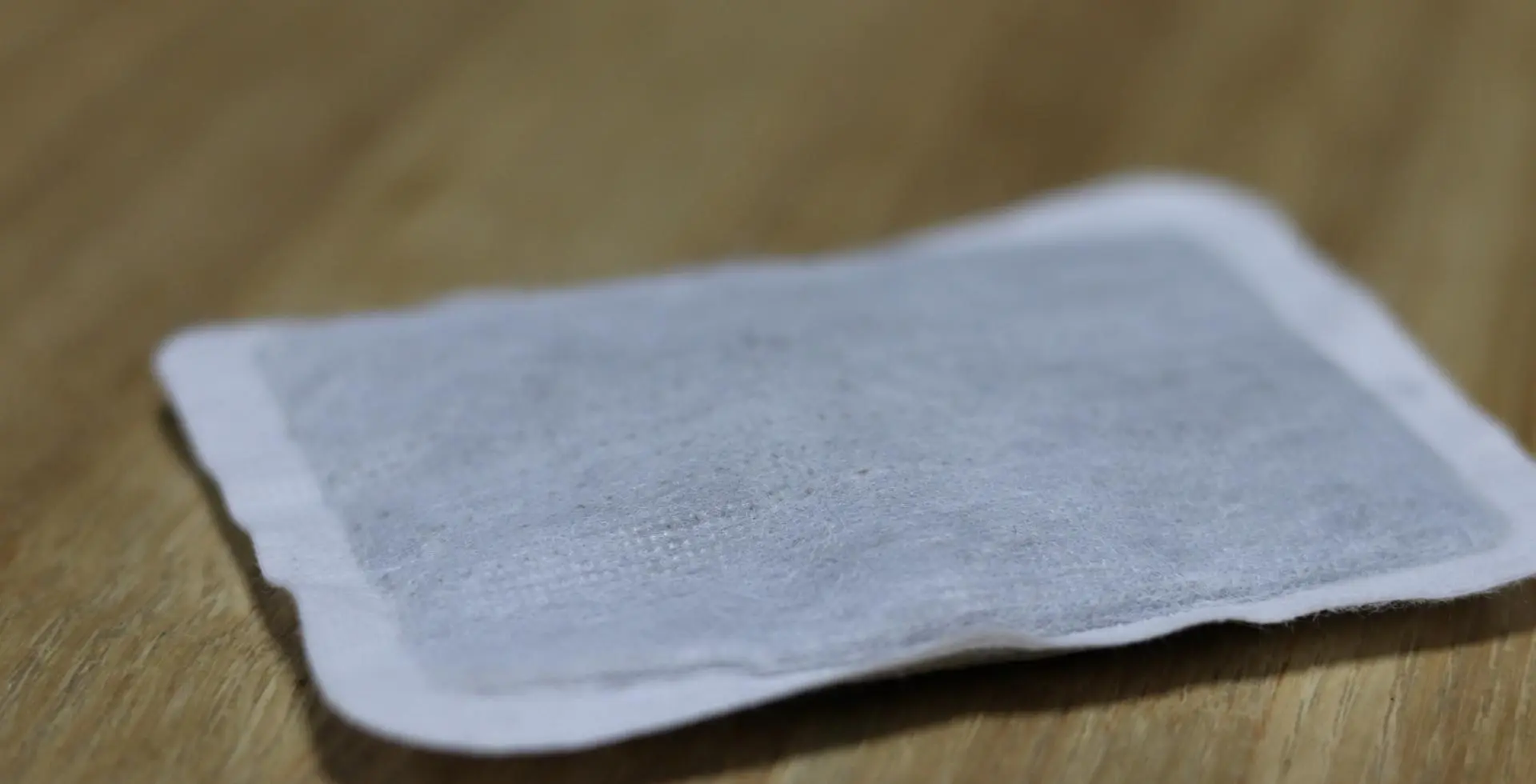
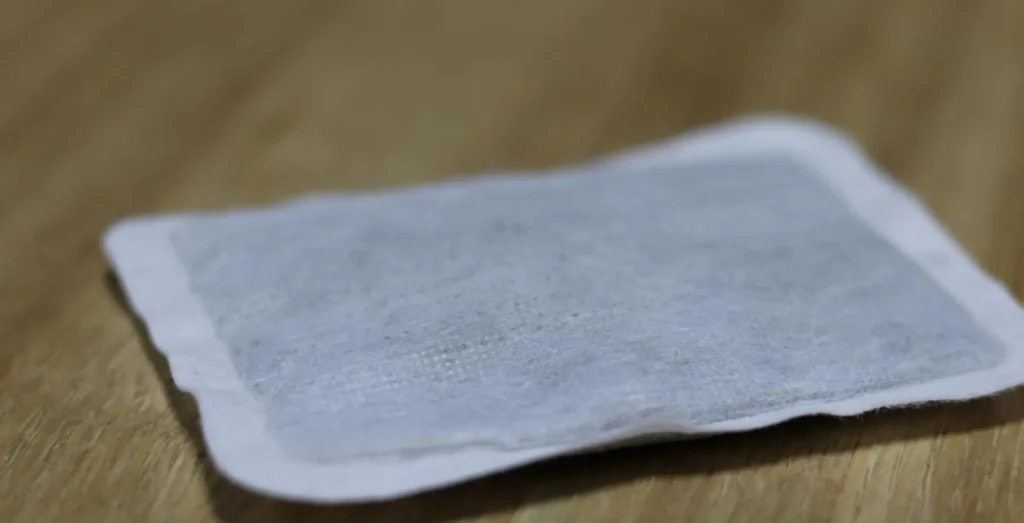
“Kairo” are disposable heat pads that Japanese people use as a matter of course during winter.
Once you open the package, the pad reacts with air and starts to warm up, providing steady heat for several hours. They’re one of the most common cold-weather items you’ll see in Japan.
Among the many types, the most useful for travelers is the stick-on version (adhesive heat pads).
You simply place it on the outside of your inner layer—your back, lower back, stomach, wherever you want warmth—and it gently warms your core from the inside. For example, sticking one onto the base layer under your sweater keeps you toasty without changing how you look from the outside.
However, never apply a heat pad directly to your skin; it can cause low-temperature burns.
And don’t put it on top of your coat either. That’s a different kind of “burn”: a visual one, where the looks you’ll get might hurt more than the heat does.
Compared to non-adhesive pads, stick-on ones don’t move around, making them especially convenient on days when you’ll be walking a lot.
The heating mechanism is simple: the iron powder inside oxidizes when exposed to air, generating gentle warmth. No batteries, no charging—just open the package and it works. Even first-time users won’t find anything confusing.
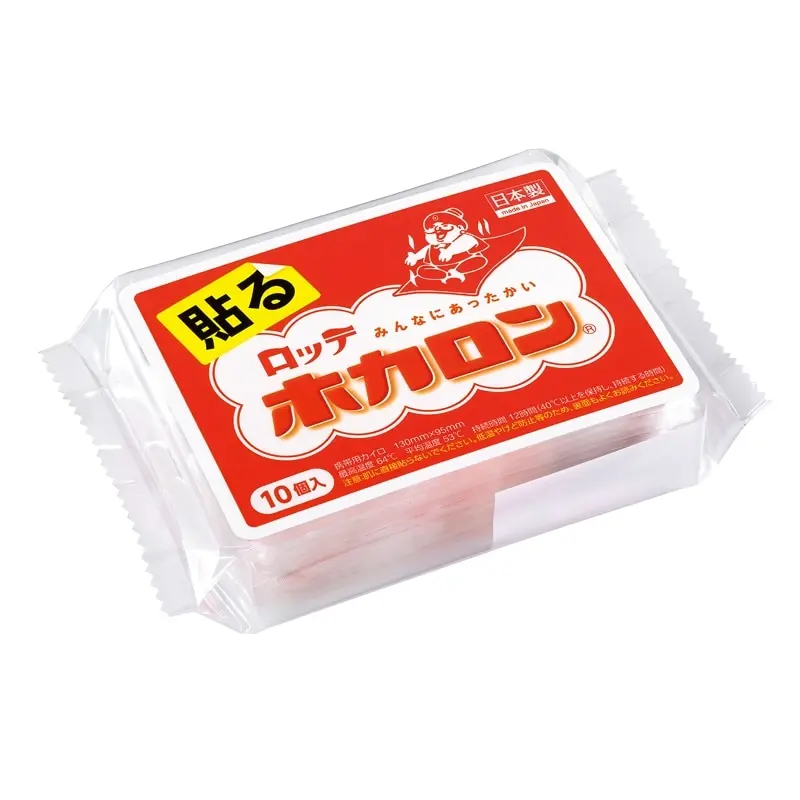
There are several types of kairo available:
・Stick-on pads:
the standard and most convenient option
・Non-adhesive pads:
ideal for warming your hands in your pockets
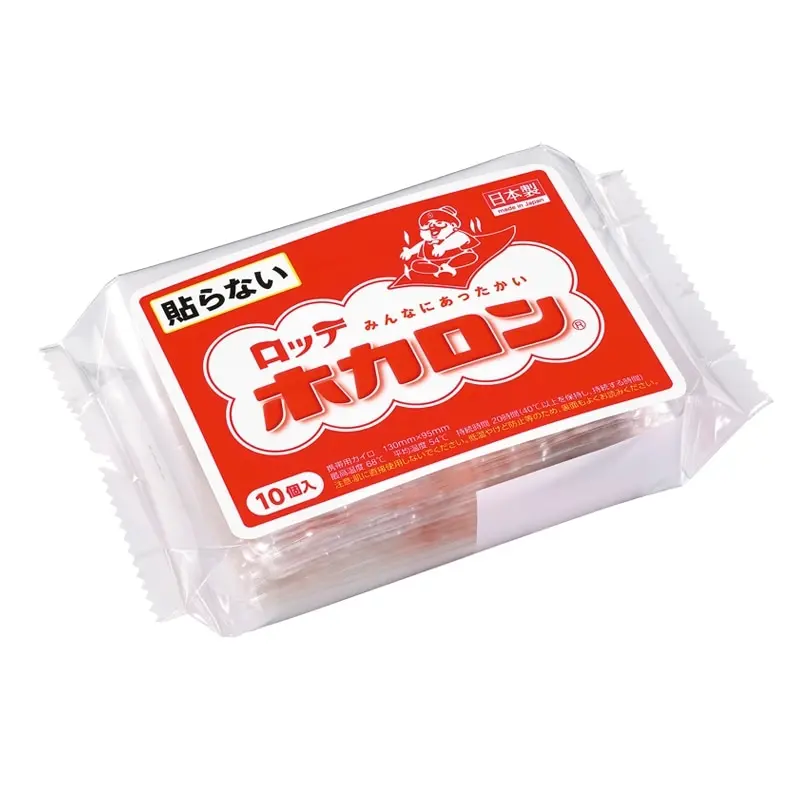
・Foot and in-shoe warmers:
designed for travelers who suffer from cold feet
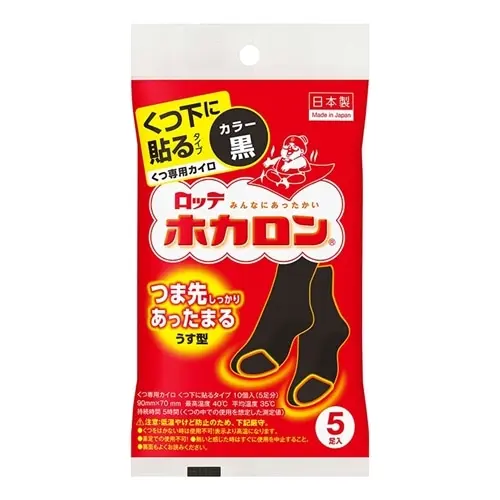
Choose the type that best matches your plan, your body, and how much time you expect to spend outdoors.
2. How to Use Them (Are They Safe?)
Disposable heat pads are generally very safe, and as long as you use them correctly, there’s very little risk of burns. For stick-on pads, all you need to do is place them on top of a layer of clothing. The most effective spots are around the center of your body—your mid-back, just below the shoulder blades, or your lower back. Warming these “core” areas helps raise your overall body temperature efficiently.
There are a few things to keep in mind.
First, never use a heat pad while sleeping. Because you’re not moving, heat can concentrate on one spot and cause low-temperature burns. Also, if you apply a pad to thin layers—like a light undershirt or tights—the heat can feel stronger than expected. Children and people with sensitive skin should be especially careful.
Another surprisingly common issue is forgetting to remove the pad after use. If you accidentally throw your clothes into the washing machine with the pad still attached, the outer layer may tear and the contents can spill out, potentially ruining your laundry. (They’re made of non-woven fabric and don’t rip easily, but it can still happen.)
Overall, the usage is simple. As long as you choose the right spot and follow a few safety tips, heat pads become a reliable way to stay comfortable during winter travel—especially on those moments when you think, “I just need a bit more warmth.”
3. Where to Buy Them
In winter, kairo are sold almost everywhere in Japan, and they’re very affordable—usually just a few dozen yen per pad. It’s worth picking some up early in your trip so you’re prepared when the cold hits.
Convenience stores (7-Eleven, FamilyMart, Lawson)
The most convenient option for travelers. They’re open 24/7, and you can quickly grab small packs of both stick-on and non-adhesive heat pads. Prices are slightly higher than elsewhere, but when you think, “I’m cold and I need one now,” convenience stores are unbeatable.
Drugstores (Matsumoto Kiyoshi, Welcia, Sundrug, etc.)
If you want more options or plan to buy several days’ worth, drugstores are the best choice. They carry everything: stick-on pads, non-adhesive pads, foot warmers, and large-size versions. Buying a multi-pack here is often cheaper than buying small packs at convenience stores.
For more details about Japanese drugstores, see the following guide:
Got a Cold in Japan? How to Find Medicine — or a Doctor
Supermarkets & 100-yen shops
During winter, supermarkets often set up special shelves for kairo, and 100-yen stores also sell small packs. The price difference isn’t huge (they’re inexpensive everywhere), but these stores tend to be the cheapest overall. If you’re not in a hurry, picking them up while sightseeing is a good strategy.
4. Summary
Kairo are one of the simplest ways to stay comfortable during winter in Japan. Stick-on pads, in particular, warm your core from underneath your clothes and help prevent the “unexpected chill” that often hits while sightseeing. They’re easy to use, and as long as you follow a few basic precautions, they’re perfectly safe.
You can buy them easily at convenience stores or drugstores, and they’re inexpensive. If you’re visiting Japan in the colder months, keeping a few kairo on hand will make your trip much warmer—and far more enjoyable.
Authentic Japanese Souvenirs, Delivered
- Hotel delivery (no international shipping fees)
- Order before or during your trip and receive everything at your hotel
- Plan ahead and start sightseeing hands-free from day one
- Save time
- No more arriving in Japan only to find the souvenirs you wanted are sold out
- Skip the souvenir hunt and spend more time enjoying your trip
- All items are made in Japan
- Forget the worry of “Is this really made in Japan?”
- Every item is carefully selected and genuinely Japanese-made