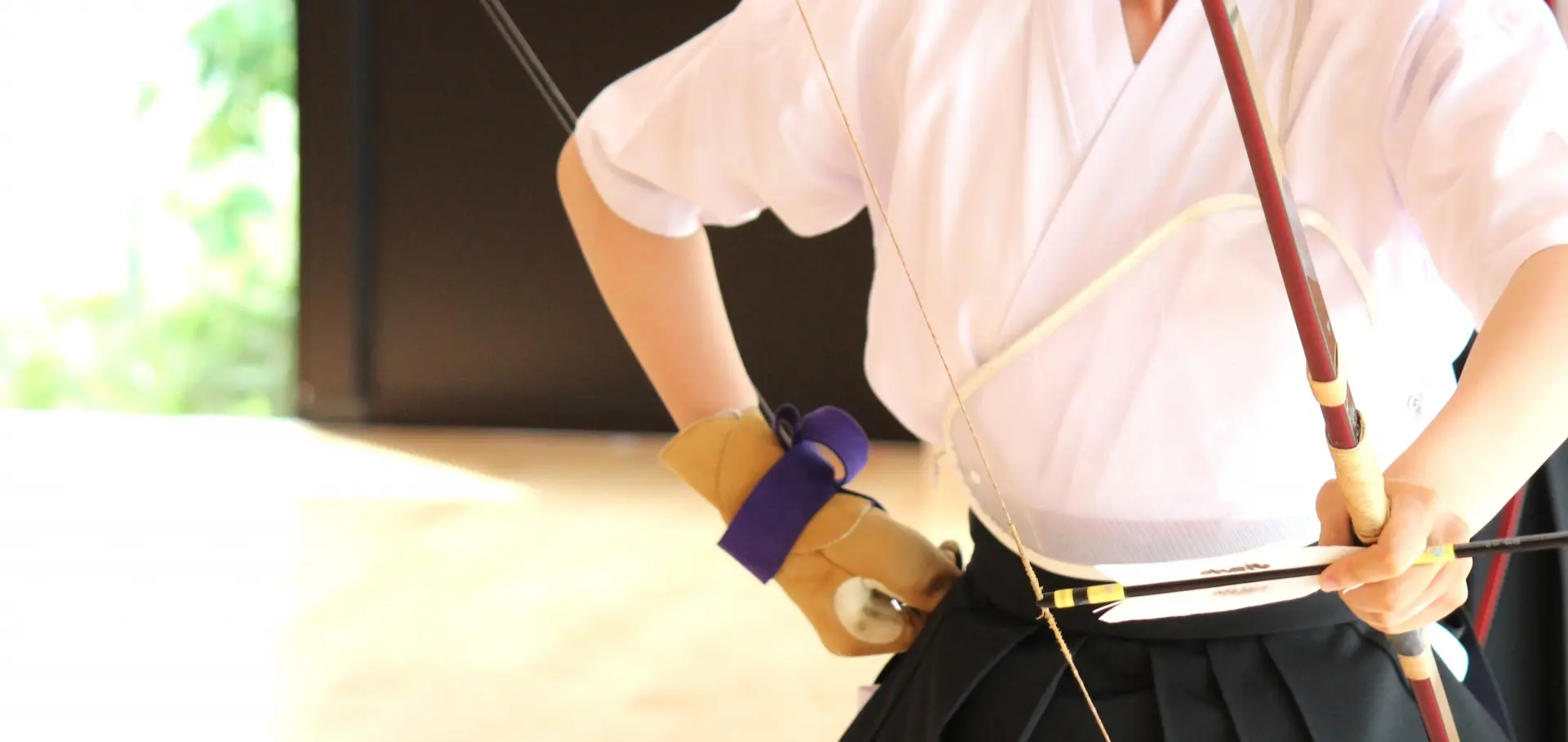
For many people, the bow and arrow is one of those “cool weapons” you admire at least once in your life, yet almost never get to touch in your daily routine. Archery has existed around the world since the Paleolithic era, so the basic concept is by no means unique to Japan. But in Japan, the bow evolved from a tool of warfare into a martial art that emphasizes mental discipline and refined etiquette. Its solemn, almost sacred presence has also made it an essential part of various traditional ceremonies.
Despite its long history, kyudo isn’t a mainstream sport in modern Japan. You rarely see it on TV or other major media. Still, dedicated practitioners continue to hold tournaments and examinations throughout the year. There are no official nationwide participation statistics, but the All Japan Kyudo Federation is said to have over a hundred thousand registered members—a number that is unlikely to decline anytime soon.
This guide explains how you can watch a kyudo match in Japan, what to expect, and where you can even try the practice for yourself.

1. Kyudo in a Nutshell
Kyudo is a Japanese martial art practiced with the bow and arrow. While it does have a competitive side today, it is far from being a simple point-scoring sport. What matters is not only whether the arrow hits the target, but how it is released—your posture, your breathing, and the calmness of your movements.
Because of this, kyudo places strong emphasis on the flow of technique (shahō) and proper etiquette (reihō). The quality of one’s form, the precision of the sequence, and the mental state behind each shot are all part of the evaluation. In other words, the process often carries more weight than the result.
This focus on inner composure and disciplined movement is what distinguishes kyudo from Western-style archery, and what makes it appealing as a martial art rather than just another sport.
2. Watching Kyudo Is Easier Than You Think
Watching a kyudo match is far more approachable than it looks. First of all, you can instantly understand the basic outcome—the arrow either hits the target or it doesn’t. The sound is also unmistakable: the quiet tension before the release, and the sharp pash when the arrow lands, make the experience intuitive even for complete beginners.
The more technical aspects—such as posture, the flow of movements, and the precision of each step—are difficult to judge without training. But you can still enjoy the performance in many ways. For example:
- the calm, almost ceremonial walk toward the shooting line
- the smooth, deliberate sequence of movements
- the shared silence as the entire venue focuses on a single shot
- the release of tension the moment the arrow strikes the target
This contrast between stillness and sudden action is one of the most captivating parts of kyudo.
That said, beginners often encounter a few surprises:
- Archers rarely show big reactions, even when they hit the target (maintaining composure is part of the art)
- The pace feels slow, and it can be unclear which parts matter most
- The format looks simple, but there are actually detailed rules behind it
None of these are obstacles to enjoying a match. Simply observing the quiet concentration and the atmosphere of controlled movement is more than enough to appreciate kyudo as a spectator.
3. Where You Can Actually Watch Kyudo
When looking for kyudo tournament information, the most reliable source is the All Nippon Kyudo Federation (ANKF). There is an English page (https://www.kyudo.jp/info/english.html), but tournament schedules are listed only on the Japanese site, so you’ll need to check that page for up-to-date details.
Tournaments are held regularly across Japan, and most events are open to spectators. However, it’s worth noting that the federation rarely specifies whether admission is free or paid. In practice, many local and national tournaments are free to watch, but the information is not always stated clearly in advance.
Below are two major tournaments that have been officially announced as of December 8, 2025.
1) 44th National High School Kyudo Championship (Selection Tournament)
- Dates: December 23–25, 2025
- Venue: Shizuoka Prefectural Budokan (Main Hall)
2-10-1 Maejima, Fujieda-shi, Shizuoka 426-0067
Tel: +81-54-636-2332
2) 77th All Japan Kyudo Championship
- Dates: May 2–3, 2026
- Venue: Miyakomesse (Kyoto International Exhibition Hall)
9-1 Okazaki Seishōjichō, Sakyo-ku, Kyoto 606-8343
Approx. 8 minutes on foot from Higashiyama Station (Kyoto Metro Tozai Line)
These are some of the most accessible large-scale tournaments for visitors interested in watching kyudo in person.
If traveling to a venue isn’t feasible, you can still get a feel for the sport through the All Nippon Kyudo Federation’s official YouTube channel:
https://www.youtube.com/@AllNipponKyudoFederation
It’s an excellent way to understand the atmosphere and flow of a match before attending one yourself.
4. Spectator Etiquette: What You Should Know
Kyudo tournaments place great importance on silence and concentration, so the etiquette differs slightly from what you might expect at other sports events. The rules aren’t difficult, but keeping the following points in mind will help you feel more comfortable as a spectator.
1. Stay as quiet as possible
Kyudo is an exceptionally quiet sport. You can hear the archer’s breathing, the tension of the bowstring, and even the subtle movement of clothing.
Avoid talking, rustling bags, or making noise when adjusting your seat.
2. Flash photography is strictly prohibited
A sudden burst of light can seriously disrupt an archer’s concentration, especially at full draw.
Flash is almost always banned, regardless of the event.
3. Some events prohibit all photography
School tournaments and certain examinations often have a complete no-photography policy.
Check signs or announcements at the venue before taking out your camera.
4. Do not enter the shooting area or walk across the shooting line
Kyudo ranges have designated paths for archers and safety zones aligned with the direction of the arrows.
Spectators should remain in the rear or side seating areas and avoid crossing in front of the shooting line.
5. Applause should be subtle
Archers rarely show visible reactions even when they hit the target.
Applause isn’t forbidden, but it’s best to keep it light and follow the atmosphere of the venue.
6. Move seats only between shooting groups
Because kyudo progresses at a calm, deliberate pace, standing up mid-round is very noticeable.
If you need to move, wait until there is a break between shooting groups or during preparation time.
5. If You Want to Try Kyudo Yourself (Options for Travelers)
Kyudo may look intimidating at first, but there are actually several ways for visitors to experience it in Tokyo. If you want more than a quick “touch and try” session, a bit of research is essential—especially if you’re looking for something closer to the real thing.
Below are two options in Tokyo that offer a comparatively authentic kyudo experience for beginners.
1) Authentic Kyudo Japanese Archery Experience in Tokyo
Viator page:
https://www.viator.com/tours/Tokyo/Kyudo-Archery-Experience-in-Tokyo/d334-59185P24
This program is run by a travel activity company and is designed specifically for visitors. The session is longer than most tourist-oriented workshops, allowing you to spend more time learning the basics and practicing your shots. The activity consistently receives high satisfaction ratings from participants.
- Duration: 120 minutes
- Price: ¥19,000 per person
- Best for: Travelers who want a structured, guided introduction to kyudo with no language barriers
2) Hankyu Dojo Yumiyasan
Official website:
https://www.yumiyasan.com/japanesearcherykyudoexperiencetokyo
Yumiyasan offers kyudo-style training using hankyu—a shorter bow of about 160 cm—rather than the full-length daikyu (about 220 cm), which can be difficult for beginners and carries a higher risk of injury. Although originally created for Japanese learners, the dojo now actively accommodates international visitors.
Because each session is private, it’s ideal for those who want a quiet, personalized experience without worrying about other participants.
- Duration: 45 minutes
- Price: ¥29,900 per person
- Best for: Travelers who prefer a private session and want a safe but authentic-feeling introduction to kyudo
6. Conclusion
Kyudo offers a uniquely Japanese blend of precision, calmness, and disciplined movement—an art form where the beauty of the process matters just as much as hitting the target. It’s surprisingly accessible to watch, with tournaments held across the country, and Tokyo provides several options for visitors who want to try it themselves.
For travelers seeking a quiet, focused cultural experience beyond the usual sightseeing spots, kyudo is an underappreciated but deeply rewarding choice.
Authentic Japanese Souvenirs, Delivered
- Hotel delivery (no international shipping fees)
- Order before or during your trip and receive everything at your hotel
- Plan ahead and start sightseeing hands-free from day one
- Save time
- No more arriving in Japan only to find the souvenirs you wanted are sold out
- Skip the souvenir hunt and spend more time enjoying your trip
- All items are made in Japan
- Forget the worry of “Is this really made in Japan?”
- Every item is carefully selected and genuinely Japanese-made